No Hot Water at All
Often a failed heating element or thermostat on electric units, or an ignition, pilot, or gas valve issue on gas units. We confirm the fault with proper testing before replacing parts.
Serving Virginia Beach, Virginia & surrounding areas
Mon–Fri 8am–6pm · Sat 9am–2pm
Water Heater Repair · Suffolk
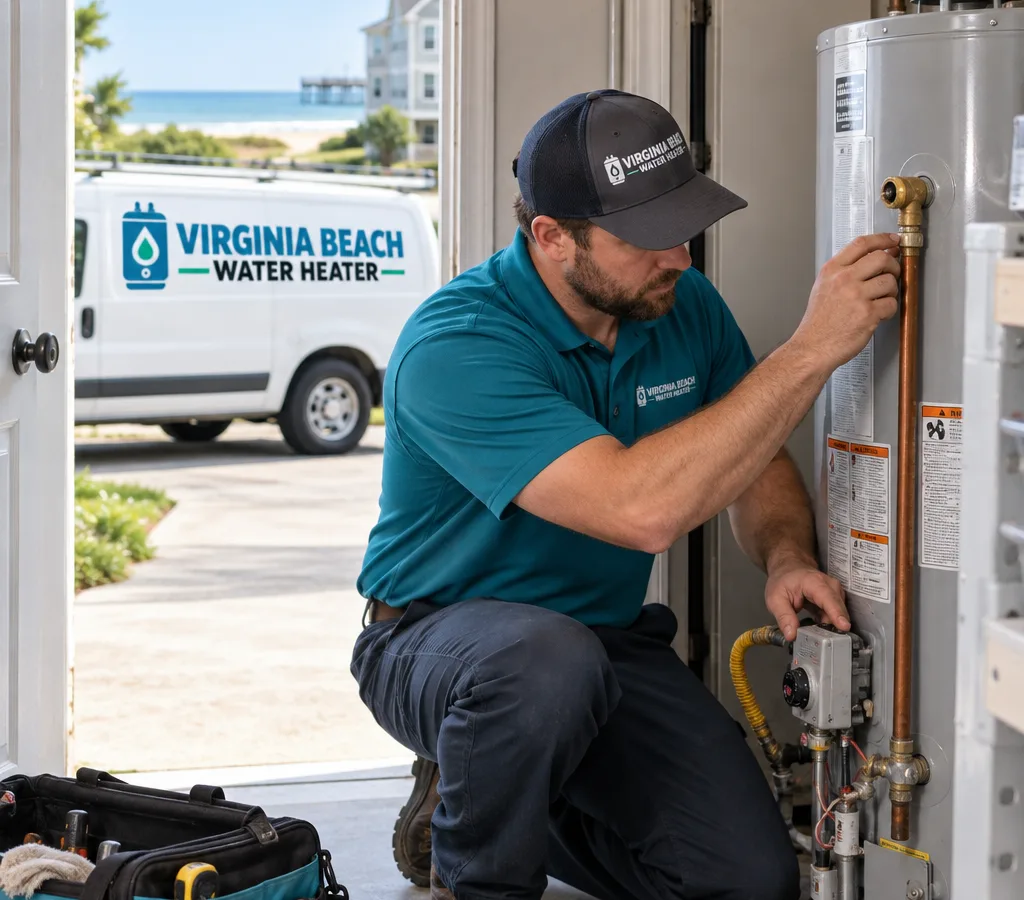
When your hot water quits, we troubleshoot fast, explain the cause in plain language, and restore service with clear pricing before any work starts.
Local Repair Service
If you are searching for hot water heater repair Suffolk, you are usually dealing with the same urgent problems: no hot water, lukewarm showers, a puddle under the tank, or a unit that keeps tripping a breaker. Virginia Beach Water Heater handles the repair work that gets hot water back safely and reliably, whether you have a tank unit or a tankless system.
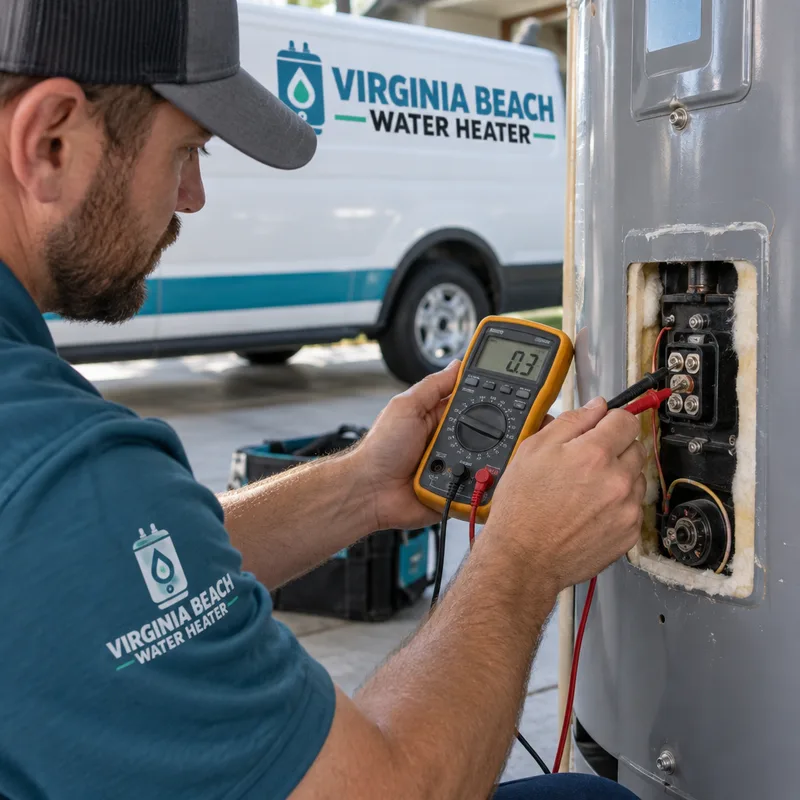
We start with a quick, methodical diagnosis. On electric heaters that often means checking power at the breaker, confirming voltage at the heater, then testing the upper and lower thermostats and heating elements. On gas heaters we focus on safe gas operation first, then the pilot or ignition system, gas control valve, venting, and burner performance. We will tell you what failed, what it takes to fix it, and what you can expect next.
Our shop is based at 1444 Southern Blvd, Suite 4, Virginia Beach, VA 23454. That puts our team in a good position to respond to Suffolk calls without treating your repair like an afterthought. For broader coverage and service information outside Suffolk, our main water heater repair overview explains how we approach common failures and scheduling.
Common Water Heater Problems
Often a failed heating element or thermostat on electric units, or an ignition, pilot, or gas valve issue on gas units. We confirm the fault with proper testing before replacing parts.
Common on tank heaters when one element is out or a thermostat is misreading. On tankless units it can be flow-sensor related or triggered by scale or venting problems.
A loose fitting or failing T&P valve may be repairable. Water from the tank body itself usually points to internal corrosion and is a replacement decision, not a patch.
Often linked to corrosion or a spent anode rod on tank units. We will discuss whether maintenance makes sense or whether you are near the end of the tank’s life.
Sediment buildup can insulate the heat source and cause overheating sounds. Flushing and inspection may help, but we also check for overheating controls and venting issues.
Electric heaters can trip from element shorts or wiring faults. Tankless units may show codes for airflow, flame failure, or overheating. We interpret codes, then verify the real cause.
Repair or Replacement
The goal is to restore hot water quickly, but also to keep you from paying for repeat failures. During your service visit we look at the age and condition of the unit, the exact source of the problem, and what it means for the next 6 to 24 months.
A repair is usually the right call when the tank is structurally sound, the leak is at a connection rather than the tank body, and the failure is isolated to a control or replaceable part such as a thermostat, heating element, igniter, thermocouple, flame sensor, or valve.
Replacement becomes the smarter option when the tank itself is leaking, the heat exchanger on a tankless unit is compromised, corrosion is extensive, or the repair requires multiple major parts at once. If you are weighing a water heater replaced Suffolk decision, we will walk you through equipment options—tank versus tankless, fuel type, and venting—along with sizing and any code-related updates that come up during installation.
Either way, you get a clear recommendation tied to what we see on site. If replacement is the path, we can usually handle removal and installation as one coordinated job so you are not left without hot water longer than necessary.
What to Expect
We confirm symptoms, unit type—gas, electric, or tankless—and any visible leaks or odor. For gas, we prioritize safe operation and venting before anything else.
We test the components that commonly fail: thermostats and elements on electric tanks; igniter, flame sensing, gas control, combustion air, and venting on gas units; sensors and flow on tankless systems.
You get a straightforward explanation of the cause and your options: repair, maintenance, or replacement if the unit is at the end of its service life.
We replace the failed components, verify correct operation, and set the temperature appropriately. We also check relief-valve discharge piping, shutoff valves, and electrical or gas connections for obvious issues.
We run the heater through a normal heat cycle, check for leaks, confirm stable temperatures, and make sure you know what to monitor over the next day.
Repair Cost Guide
Hot water heater repair in Suffolk typically runs about $200 to $900, with many common fixes landing in the $300 to $600 range depending on the failure and the unit type. Smaller repairs like thermostat or element replacement and pilot or ignition troubleshooting usually cost less than major control, gas valve, or tankless component work.
Your exact price depends on the heater type—gas, electric, or tankless—access such as a tight closet versus an open garage, diagnostic time, parts availability, and whether corrosion has seized fittings or damaged wiring or piping. The final cost is confirmed after the on-site inspection and diagnosis.
If the heater is leaking, tripping power, or leaving you without hot water, get a same-day diagnosis when possible and a clear plan for repair or replacement.
Call for a Free QuoteCustomer Experiences
“We lost hot water overnight and assumed the tank was done. The tech tested everything first, replaced a failed thermostat, and had hot water back the same afternoon. The explanation was clear and the price matched what was quoted.”
“Our heater was leaking at the top connection. They found a corroded fitting and shutoff issue, fixed it, and checked the relief valve and temperature settings before leaving. No more puddles.”
Homeowner Questions
Many repairs can be completed the same day once the problem is diagnosed and the correct part is on hand. Straightforward electric element or thermostat repairs and common gas ignition issues are often quicker than tankless diagnostics that involve multiple sensors or venting checks.
No, but it depends on where the leak is coming from. A leak at a fitting, valve, or the T&P relief valve may be repairable, while water seeping from the tank body usually means internal failure and points toward replacement.
Failed heating elements and thermostats are the most common culprits, along with wiring issues or a tripped breaker. We verify voltage and test each component rather than swapping parts based on symptoms alone.
Yes, replacement typically includes removing the old unit, setting and connecting the new heater, and confirming safe operation. We also flag any needed updates that come up during installation, such as shutoff-valve issues, venting problems on gas units, or damaged wiring.
Tankless can be a good fit when you want longer continuous hot water and have the right gas supply, venting, and space for the unit, but it is not always the simplest swap. During the visit we can explain what changes would be required in your home so you can compare a like-for-like tank replacement with a tankless upgrade.
Yes, we diagnose and repair both gas and electric tank units, plus many tankless models. The service approach differs by fuel type, so we start with safety and proper testing before recommending parts or replacement.
Schedule Water Heater Service
Tell us what the heater is doing and where it is installed. We will schedule a service visit, diagnose the issue, and give you a clear repair plan or a replacement recommendation based on what we find.